

Incorporating Buckwheat (обикновена елда) into your meal plan will surely benefit you. This gluten free pseudo-cereal (seed) produces as many health benefits as it’s unique, earthy flavor. The Celiac Disease Foundation lists Buckwheat as one of the gluten free options compliant with the gluten free diet as it’s groats (kasha) are gluten free.
Compared to other foods, Buckwheat contains a considerable amount of protein, dietary fiber, and micronutrients which makes it an even better choice compared to rice and pasta. Whole buckwheat contains 11 grams of protein, just under 5 grams of fiber, and magnesium (203 mg), phosphorus (374 mg), and potassium (414 mg) in an even 100 gram serving. Buckwheat has the potential to create a lot of variety in your meal plan as it is a nutrient dense food.
Culinary Uses of Buckwheat
When it comes to cooking, buckwheat is one of the easiest options. It’s cooking time is shorter than many other ingredients, it’s ability to absorb flavors is high, and it’s versatility for sweet and savory meals is a unique characteristic. The groats have a nutty flavor that gives an additional layer of taste to anything, even your morning porridge.
Buckwheat is an excellent choice for people with celiac disease or gluten sensitivity, as it does not contain gluten. If gluten is a concern, check for gluten-free certifications on packaging. It is best to avoid bulk bins with loose buckwheat products as cross-contamination is a high risk.
Buckwheat contains fiber and protein, which help keep you feeling full and is a good choice for providing sustained energy and defeating mid-day slumps.
Breakfast Ideas
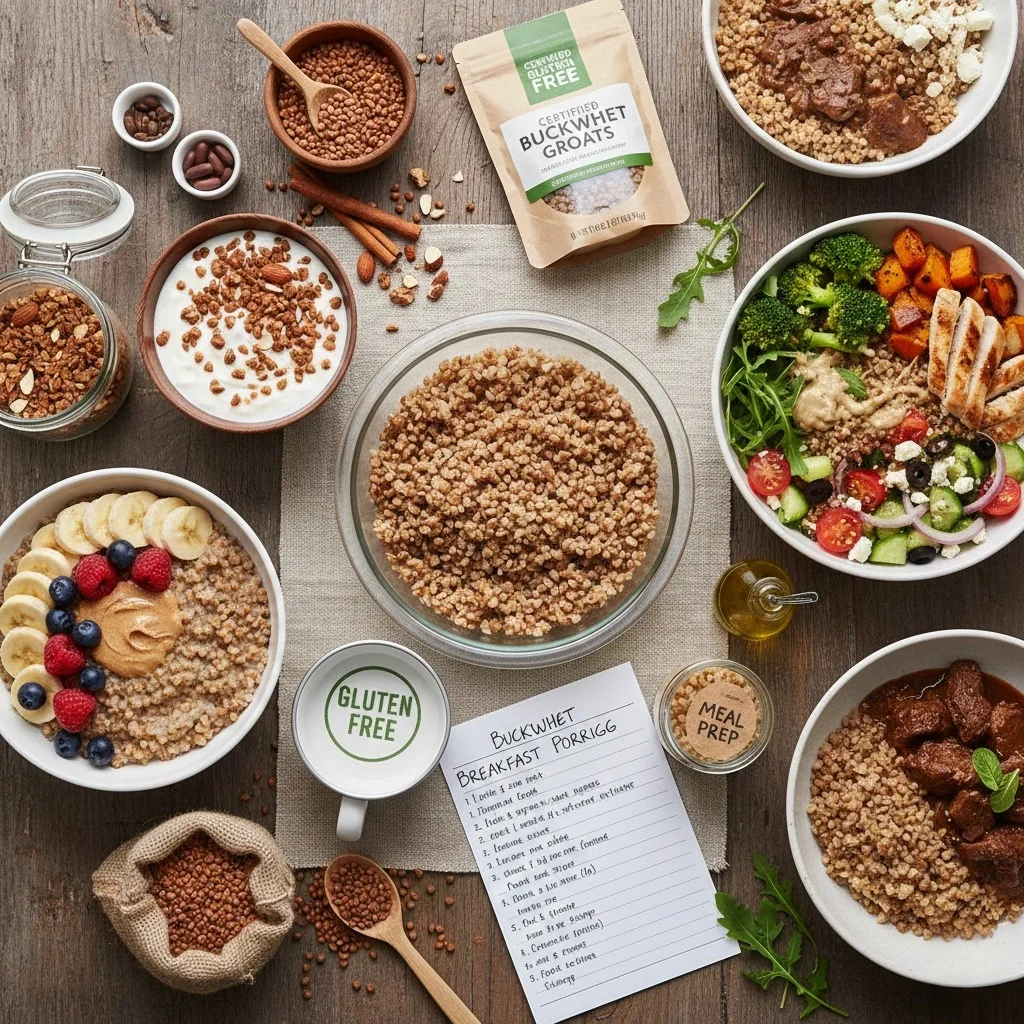
Pre-cooked buckwheat porridge is a good hearty choice for a warming breakfast alternative to oatmeal. In a pot, bring water or milk to a boil and add 1 cup of buckwheat groats and simmer until tender, about 10 to 15 minutes. You can keep it simple or add some your choice of nut butter, bananas, honey, and berries. for an energy boost.
You can also make some buckwheat groats in an airtight storage container of the fridge all week, and then microwave portions as you go, adding a new topping each breakfast to keep it interesting.
If you want something lighter, you can make buckwheat granola. Just roast your buckwheat groats in the oven with a drizzle of maple syrup, then throw in your choice of nuts and some cinnamon and you’ve got a delicious topping for yogurt or a healthy crunchy snack on the go.
Ideas for Savory Lunches and Dinners
An ingredient that excels in savory applications, buckwheat can be used as the foundational layer in a grain bowl. On top of the groats, place roasted veggies, grilled chicken or tofu, a handful of fresh leafy greens, and drizzle some tahini or lemon vinaigrette. Buckwheat’s flavor is subtle enough to let other ingredients shine.
For lunch, an easy option is a cold buckwheat salad. Use chopped cucumber, cherry tomatoes, red onion, and feta, with an olive oil dressing to finish it. This takes inspiration from the Mediterranean and is great for meal prep.
Additionally, buckwheat can be used instead of rice for stirfry, or served along with braised meats and stews. It’s slight chewiness provides a nice texture in heartier dishes.
How to Cook Buckwheat
Buckwheat is easy to prepare. In a small pot, bring 2 cups of water to a boil. Add 1 cup of buckwheat groats along with a pinch of salt. Bring back to a boil, then lower the heat to a simmer. Cover and cook for 10 to 15 minutes until the groats are tender. Any water that is not absorbed should be drained.
To bring out a nuttier flavor, you can dry toast the groats in a pan for a few minutes before boiling. This helps develop the flavor a little more for the dishes you’re making.
The buckwheat can become mushy if you leave it on the heat for too long, so it is best to check on it around the ten minute mark to see if it is cooked, and increase the cooking time if necessary.
If you are doing bulk cooking, you can keep cooked buckwheat in a sealed container for up to five days, and then reheat it in the microwave or on the stove, adding a little bit of water in the microwave.
Routine with Buckwheat
It’s not too tough to add buckwheat to your cooking on a daily basis. You will be making little to no effort when it comes to making meals. It is just as easy to use buckwheat instead of another grain. Since buckwheat cooks so quickly you can use it for the same purpose as any other grain. You can even use it in a breakfast porridge, a lunch salad, or a dinner grain bowl. Feel free to get creative and use the flavors and ingredients you like.
Try to keep a bag of buckwheat in your pantry and use it when you are in need of a nutritious and filling meal. Buckwheat is a whole grain that is free of gluten, so it is great for those with gluten allergies. With a little creativity, you can use buckwheat in a lot of dishes to make it a staple in your healthy meals.