

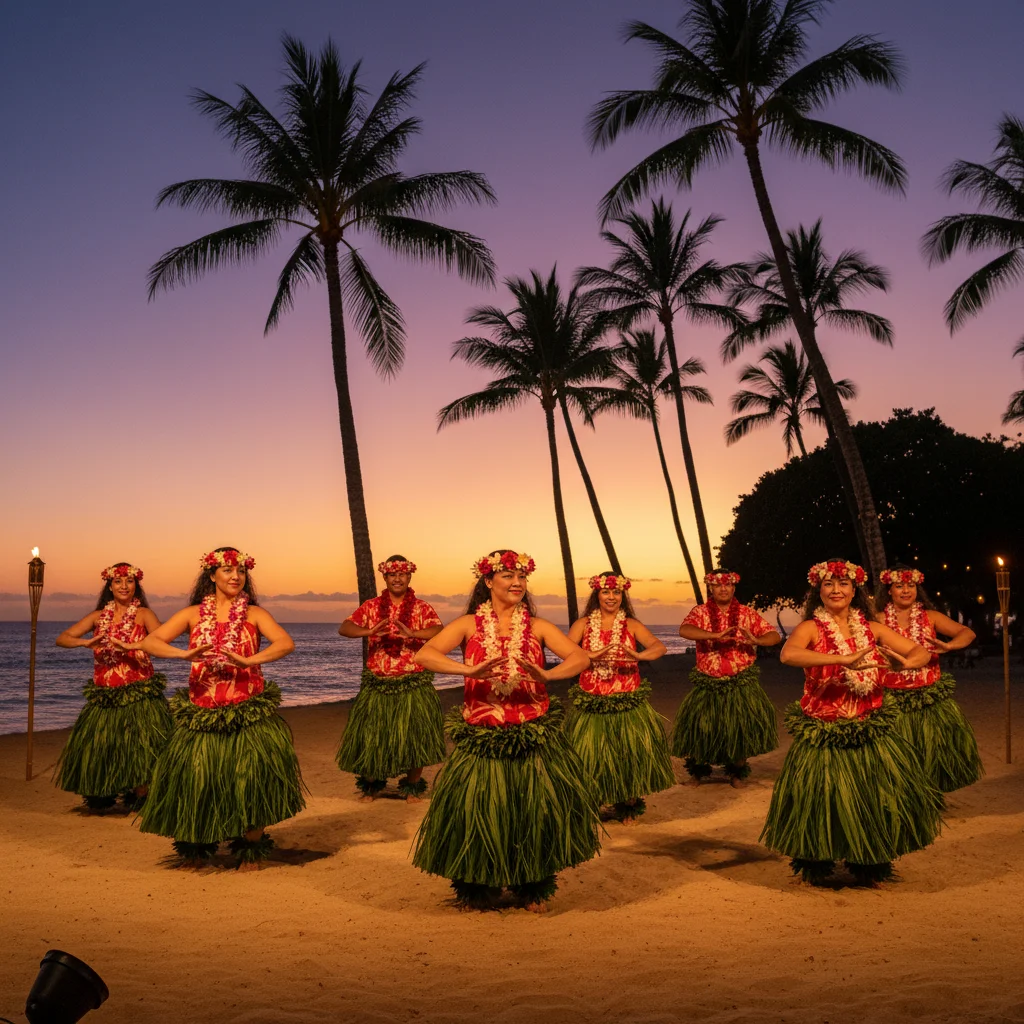
Melekaike Laka – Now, envision Hawaiʻi while listening to an upbeat song, imagining a strumming ukulele, a soft steel guitar, and waves crashing. In addition to the famous sounds, there’s an ancient rhythmic water chant and movement of Laka, the hula goddess. It’s called the mele, inspired by Laka.
During the holidays, tourists often recognize “Mele Kalikimaka.” However, the cultural influence of the Hawaiian performance art is a spiritual and nature-based. It comes from the mele- a historical, poetic chant that documents and preserves history- and Laka, the muse of the hula, the dance. It is fundamental to Hawaiian storytelling. It has inspired cultures and transformed the world, from endless centuries of preservation to modern-day, influencing pop culture.
Mele and Laka, Hale and Hula, the Forest
Before we can assess the significance and power of Hawaiian performance, we need to go back to the Laka.
In the early days of the islands, hula was not performed for entertainment. It was a religious sacrament. The halau hula was a place of great rigorous discipline. Before a dancer was allowed to move, they had to learn the mele, the words of the chant. In Hawaiian tradition, the words have power (mana). The mele holds the genealogy, the mythology, and the history of the people. It was Laka who inspired the dancer to translate the words into movement.
Dancers would travel to the mountains to collect and offer native maile vines and lehua blossoms to Laka. This act also spiritually united the dancer to the forest and ensured that she was grounded in the earth when moving.
Cultural Significance: The Heartbeat of a People
The importance of the mele to Laka that is performed beyond the stage is immense. In a culture that had no written words for thousands of years, the chants of the mele served as a library for the Hawaiian people. It held the knowledge of the stars for wayfinding, the genealogy of the chiefs (aliʻi) of the land, and the great battles of the goddess Pele.
In the halau, the connection to Laka represents the devotion to mastery and protection. The duality of Laka is also notable; she is frequently associated with Kapo, a sorcery goddess of a more sinister disposition. This duality is a reminder to practitioners that hula is an art form of balance; there is beauty and there is brutality, there is order and there is chaos. When a dancer today performs a mele for Laka, she is not simply dancing, she is invoking an ancestral line that endured the abolition of the kapu system in 1819 and the attacks on the hula by the missionaries in the following decades.
Contemporary Modifications and the “Hapa Haole” Period
When the world began to open to the Hawaiian Islands and the 19th and 20th centuries rolled in, the sacred sounds of mele began to mix with the sounds of the western world and a new form of adaptation was born. This period of transition saw the emergence of hula kuʻi (joined hula) and subsequently hula ʻauana (modern hula), which incorporated new melodies and new instruments, including the guitar and ukulele.
Hawaiian pop music’s influence on the rest of the world began during this time as a result of the love of Hula and Hawaiian music and the infusion of Laka’s imagery, Hula, the lei, and the popular dance of the 1930’s and 1940’s Hapa Haole music craze. Hapa Haole music incorporated and imitated the music of the Hula and the Hawaiian music for the western audience. While many Hapa Haole music compositions excluded the sacred traditions of the Kuahu altar, they embraced the visual of Hula and the music of Hawaiian and Westren audience.
Pre-eminent Examples From Ancient Chant to a Christmas Classic
Pop culture has a most re-emphasizing presence in the song “Mele Kalikimaka” which has Hawaiian lyrics and describes a Christmas song. The song was written in 1949 by an American priest and is a phonetical translation “Melekalikimaka” which is a Hula chant for the Goddess Laka. It is separate from the Laka chants, and once again reflects the popularity of the Hawaiian language and the musical style. It is widely popular and embraced by the audience.
The Mele Hula of the festivals of the Merrie Monarch is an example of the authentic and true resonance of Laka that many experience through the Hula.
- “Noho Ana Ke Akua I ka Nahele”: A classic chant that speaks about the Goddess dwelling in the forest and the Goddess is Laka which connects all the dancers to Laka’s realm.
- “Kaulana Na Pua”: This mele shows the evolution of the form to serve new purposes while still using the structure of the traditional mele. It tells the story of resistence.
- “Mele Kalikimaka”: Written by the same authors of the song “Mele Kalikimaka” which has been recorded by Bing Crosby and the Andrews Sisters and was featured in the National Lampoon’s Christmas Vacation, and has become the foremost entry point to the island soundscape for many, not knowing the song is far removed from the sacred origins of Laka.
Contemporary Artists
The ancient mele is influencing modern artists, culminating in a Hawaiian Renaissance. Contemporary artists are drawing from the roots of the art form and are no longer just replicating the “tourism” version of hula, but honoring Laka in her true spirit.
Musicians such as Kealiʻi Reichel and the now deceased Israel Kamakawiwoʻole have mixed modern pop styles with the ʻōlelo Hawaiʻi and traditional chanting styles. They have proven that even audiences who do not speak the mele language will appreciate the higher spiritual meaning of these songs. By honoring the traditions of the halau and the goddess Laka, these performers do not let the art form of mele languish in a museum, but rather, bring it to the contemporary world.
The Enduring Legacy of Laka
The imagery of hula and the sound of traditional Hawaiian songs, or mele will always evoke a universal desire to connect with the land, history, and the divine. Laka will always be the unspoken and unseen presence in every act of a hula performance reminding everyone that true art is never just about entertainment, but about the spirit. Whether it is the catchy jazz-like commercial tunes of a holiday song or the pounding of an ipu heke at a religious ceremony, the spirit of Laka is always there.